Commercial buildings don’t age quietly. They drink energy, shed heat, wick moisture, and hide past uses that can come back to bite new owners. When I walk a site as a commercial building inspector, I’m not just logging defects. I’m mapping risk, much of it environmental. Moisture behind a cladding panel, a dusty mechanical room, a neglected roof drain, a boiler flue that never got sealed properly, one former tenant who ran an auto body shop two decades ago. Each detail points to potential liabilities that affect financing, insurance, occupant health, and the operating budget for the next decade.
For buyers, lenders, and property managers in Ontario markets like London and Sarnia, the environmental pieces often drive the most expensive surprises. Mold remediation that extends beyond a bathroom into a concealed shaft. Asbestos wrapping on mechanical piping that complicates a simple retrofit. VOCs trapped in a tight building envelope after a renovation. The good news is that most of these can be forecasted with disciplined inspection, targeted testing, and honest reporting.
This is a look at what matters most, how to approach it, and why the right team and tools make a measurable difference.
What “environmental” means on a commercial walk
A commercial building inspection takes in the structure, envelope, electrical and mechanical systems, site drainage, and accessibility. Environmental concerns cut across all of them. Moisture intrusion drives mold growth and structural decay. Poor ventilation drives indoor air quality complaints, absenteeism, and tenant turnover. Legacy materials like asbestos and lead complicate even small capital projects. On some sites, underground storage tanks or former industrial uses leave behind contaminated soil and vapor intrusion pathways.
In practice, a commercial building inspector has to triage. We visually document issues, deploy non-invasive tools like moisture meters and infrared, and then recommend specialized testing where warranted. Our standard report might call for mold testing in a cold room below grade, asbestos testing in mechanical rooms, or air quality testing in office zones with comfort complaints. When the site history hints at past spills or solvent storage, we advise engaging an environmental consultant for a Phase I Environmental Site Assessment. The right escalation saves money and time, because it puts the deep testing where it matters.
Moisture is the starting point
Most of the occupational health issues I see trace back to water. Not floods, just persistent moisture. A parapet flashing that opens up over time. A clogged scupper that lets water pond on a flat roof for days after a storm. A slab-on-grade retail unit with seasonal vapor drive pushing moisture into vinyl flooring and baseboards. On a thermal imaging house inspection, the camera paints these areas in obvious blues and purples. In a large commercial space, thermal imaging can pinpoint a wet perimeter sill or a chilled stripe at a duct joint that is condensing in humid weather.
Infrared by itself is not a mold inspection. It simply tells you where to look. The next step is a moisture verification with a meter, then a targeted inspection behind the finish. If we see organic material, stubborn dampness, and musty odours, mold testing often adds value. Many clients ask for mold testing London Ontario or mold testing London ON. The decision to sample should be tied to an action. If the plan is to open up a wall anyway, sampling is usually unnecessary. If stakeholders need documentation for a tenant dispute or to scope a remediation, a combination of air and surface samples, taken by a home inspector London Ontario trained for commercial environments or a specialized hygienist, can establish baseline and post-remediation conditions.
I’ve opened commercial washroom chase walls that looked clean at first glance, then found blackened drywall around a small pipe penetration, with spores traveling along the paper facing. That never shows in a drive-by inspection. It shows when you read the building’s history, smell the room, scan the wall with infrared, then validate with a pin meter. For property managers, the best practice is to plan annual moisture sweeps of high-risk areas: roofs, mechanical rooms, below-grade walls, window perimeters, and any space where humidity regularly spikes.

Ventilation, pressure, and indoor air quality
Indoor air quality sits on top of ventilation and filtration. In office buildings I inspect in London and Sarnia, the most common IAQ complaints come from imbalanced systems. A supply fan upgrade without a matching return path leaves positive pressure in corridors and stale air in enclosed rooms. Conversely, high exhaust from washrooms or kitchenettes can pull negative pressure on a floor, drawing humid air through the envelope and wicking moisture into drywall.
Measured, modest steps solve most complaints. Verify outdoor air dampers are open and functional. Check that economizer logic is not fighting the weather. Confirm filtration matches the design intent. Post-renovation, I sometimes see MERV 13 filters jammed into housings meant for MERV 8, which drives pressure drop, reduces airflow, and triggers hot and cold calls. Upgrading filtration is good for health, but only when the fan curve and motor can handle it. During a commercial building inspection we record filter types, fan states, and damper positions, then recommend air balancing or air quality testing London Ontario when occupants report headaches, odours, or irritation.
When a tenant reports odor spikes at certain times of day, we look for cues: loading dock doors open for deliveries, a nail salon venting poorly in a mixed-use strip, or a food-service tenant cooking on a hood with no make-up air. Targeted air sampling can confirm VOCs or particulates, but often the fix is mechanical. Replace a seized actuator, seal leak paths in return plenums, and correct pressure differentials.
For industrial or mixed-use buildings near Sarnia, indoor air quality Sarnia, ON issues sometimes involve off-gassing from stored chemicals or seasonal humidity load off the river. A data logger that runs for a week often tells a clearer story than a single snapshot test. For skeptical owners, show the numbers: CO2 levels rising above 1,000 ppm during mid-day occupancy, PM2.5 spikes near a production line start-up, or RH climbing above 60 percent on summer afternoons.

Asbestos, lead, and other legacy materials
If your building dates from before the early 1990s, assume suspect asbestos-containing materials until proven otherwise. I see it most predictably in mechanical insulation on hot water piping, 9 by 9 floor tiles with black mastic, transite panels, plaster and certain textured finishes, and sometimes in roofing materials. An asbestos home inspection framework translates well to commercial space, with the caveat that access is often trickier and abatement areas larger. Before any contractor cuts, grinds, or sands in suspect areas, get a sample taken by a qualified professional. For clients searching for asbestos testing London Ontario, the key is chain-of-custody sampling to a certified lab and a clear inventory that is easy to hand to your mechanical or roofing contractor.
Lead shows up in older paints and some roof flashings. It becomes a hazard when you disturb it. If your capital plan includes window replacement or major repainting, build in testing and safe work protocols early. The cost and schedule hit is always smaller when discovered during planning rather than during demolition.
PCB ballasts, mercury thermostats, and refrigerant handling are lower-profile Home inspector risks but still matter. In one mid-rise retrofit, the general contractor budgeted for new LED fixtures but forgot about PCB ballast disposal rules, which delayed the permit closeout and added thousands in hazardous waste fees. An experienced commercial building inspector flags these items in the report so they don’t blindside the pro forma.
Site history, tanks, and vapor intrusion
Some of the most expensive environmental liabilities hide in the dirt, not the building. If a property once hosted a dry cleaner, fueling station, autobody shop, or metal plating line, there is a non-trivial chance of soil or groundwater impact. A Phase I Environmental Site Assessment digs into historical records, fire insurance maps, and aerial photos. If the Phase I identifies recognized environmental conditions, a Phase II involves sampling. As a building inspector, I don’t conduct Phase I or II assessments, but I read enough of them to know when to advise a client to get one. Evidence on the ground matters: vent pipes with no clear purpose, patched concrete pads, stained soils near old loading areas, or a fill cap hidden behind landscaping.
Vapor intrusion is the quiet cousin of soil contamination. Volatile compounds can move through soil gas and enter the building through cracks or utility penetrations, especially when the building runs negative pressure. The symptoms can look like a comfort complaint. That’s where good communication between the commercial building inspector and the environmental consultant pays off. We map the building pathways and HVAC pressures, they test the sub-slab and indoor air. Together, we help the owner understand mitigation options, like sub-slab depressurization or sealing and pressure balancing.
Mold inspection and testing, done with purpose
When clients ask for mold inspection or mold testing, I ask two questions. What is the goal, and what are we ready to do with the result? If the goal is to reassure tenants, a visual survey combined with moisture mapping can provide clarity. If the goal is to scope a remediation and verify that a space is safe after cleanup, then sampling is warranted, with pre and post-remediation baselines. In London and surrounding Ontario communities, regulations are straightforward but lenders and insurers often want documentation. Mold testing London Ontario, when done by a trained home inspector Ontario professional or hygienist, should include lab analysis, chain-of-custody, and a simple summary that a non-technical reader can understand.
I’ve used air samples in office suites where odors tracked to a damp rooftop unit. The lab report, combined with photos of matted filter media and a clogged condensate line, made it easy for the owner to justify a coil cleaning, pan replacement, and a brief shutdown to sanitize the plenum. No drama, just cause and effect documented for the record.
Practical best practices for owners and managers
Building health is not a one-time event. It happens in loops. Inspect, measure, correct, document, repeat. On commercial inspections I stress three habits that consistently lower environmental risk and operating cost.
First, manage water at the top. Roofs are the single largest source of avoidable moisture. Keep drains and scuppers clear, and log ponding after storms with photos. Budget for timely patching and re-sealing of penetrations. Thermal imaging after rainfall can reveal saturated insulation long before a leak stains a ceiling tile.
Second, set filters and ventilation to match the use. A law office has different needs than a gym. If you upgrade filtration, confirm fan capacity, then balance the system and document the settings. Keep an eye on indoor relative humidity. If your space lives above 60 percent RH for long stretches, mold risk climbs and comfort falls.
Third, control access to legacy materials. Maintain a binder that inventories asbestos-containing materials by location. That single document saves hours of confusion when a contractor shows up to cut pipe or core a slab. For properties in London Ontario and Sarnia that changed uses over time, I recommend updating the inventory after any renovation or tenant turnover.
When to bring in specialists, and whom to call
A competent commercial building inspector covers a wide field, but no one does everything. The art lies in knowing when to bring in the right specialist and framing the scope so owners don’t overspend.
You want an environmental consultant for Phase I and Phase II assessments, for vapor intrusion concerns, and for complex contamination. A hygienist or qualified technician handles detailed air quality testing, including VOCs and particulates, and mold or asbestos sampling. A roofing consultant is wise if the roof is large, old, or repaired many times, because warranty and material compatibility rules can be tricky. And if a space is being renovated for a more intensive use, a mechanical engineer can recalc outdoor air and filtration properly.
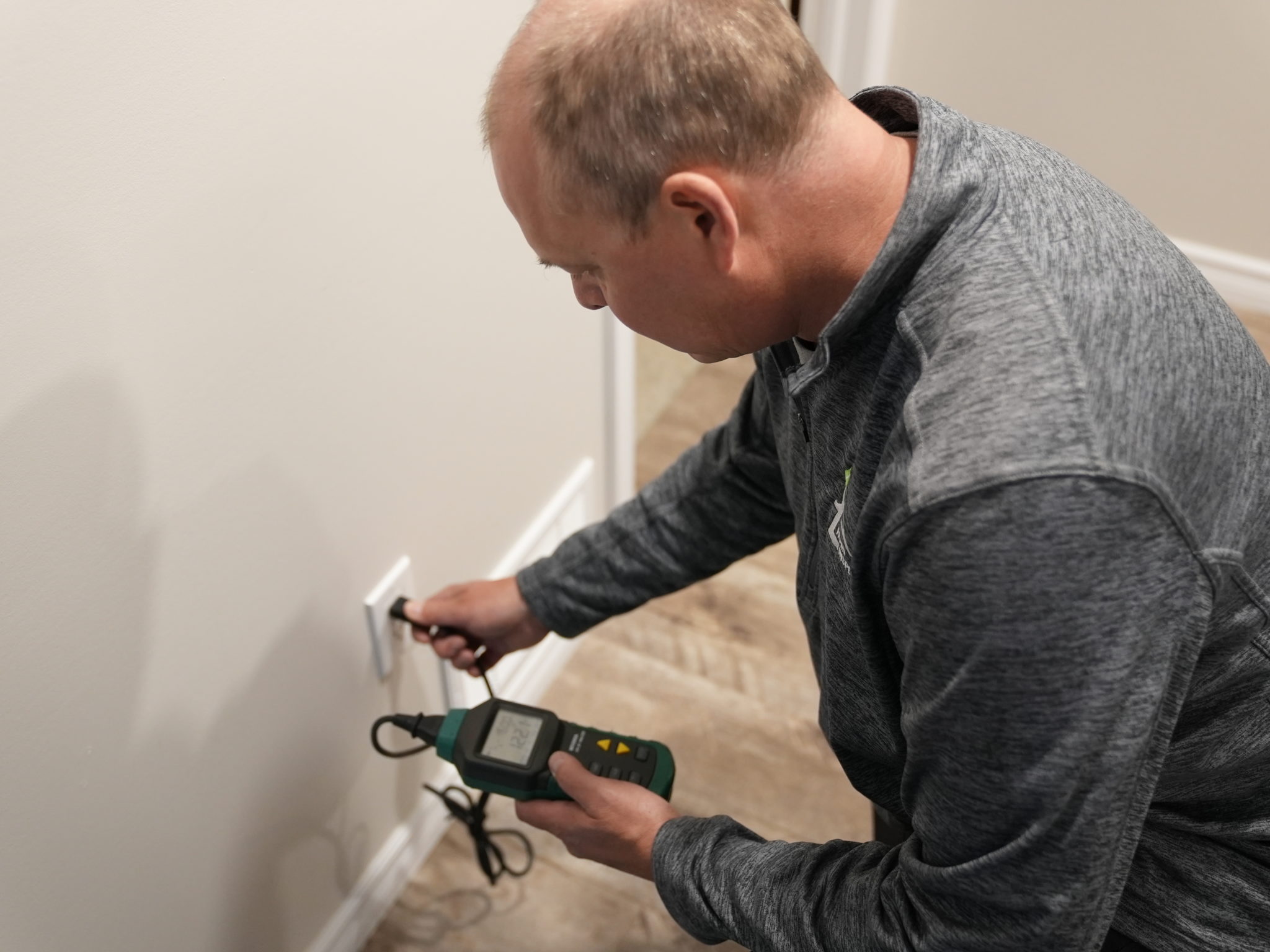
Property managers often search for home inspectors near me or home inspectors highly rated when they really need someone who regularly handles commercial building inspection work. Residential experience translates, but scale and complexity matter. If your building lives in London, consider a home inspector London ON who can operate comfortably in mechanical rooms and on flat roofs. If your portfolio includes mixed residential and retail, a local home inspector who knows both sets of codes is valuable.
Case notes from the field
A downtown London office tower had recurring musty odours every spring. The janitorial crew blamed the carpet. Thermal imaging during a rainy week showed cool streaks at the perimeter wall behind the baseboard. A moisture meter confirmed readings above 20 percent on gypsum at several columns. The cause was wind-driven rain at the curtain wall spandrel panel transitions. No visible leaks inside, just slow wetting. Repairs focused on re-sealing vertical joints and adding backer rod at suspect spans. No need for broad mold testing, but we did one round of air sampling to satisfy tenants and set a baseline for future monitoring. The odour complaints dropped within a month.
A Sarnia light industrial unit showed high humidity and rust forming around steel door frames. Tenants complained about stuffy air. The HVAC system had been “upgraded” with high-efficiency filters, which cut airflow, and the exhaust fans ran non-stop without make-up air. CO2 logging hit 1,200 ppm mid-day, and RH regularly topped 65 percent. We stepped down to a filter the fan could handle, opened the outdoor air damper to the designed position, and installed a simple interlock for make-up air. We also set a maintenance reminder to clean condensate pans quarterly. No sampling beyond CO2 and RH was needed.
In a 1970s medical office building, a planned renovation triggered asbestos concerns. Our walk found pipe insulation with a fibrous jacket in tight crawl spaces, suspected asbestos in floor tiles, and a patchwork of old fireproofing material above the ceiling. We advised asbestos testing London Ontario through a qualified lab. The inventory allowed the GC to phase abatement with the schedule. Because the building stayed occupied, negative pressure containments and after-hours work were set up in advance. The project ran with fewer surprises, and the owner avoided last-minute change orders.
Documentation owners actually use
A good commercial inspection report blends narrative and evidence. If a roof drains poorly, show the ponding depth at three points and the deck slope in inches per foot. If a mechanical room contains suspected asbestos, map the areas and provide photos that a contractor can use to plan containment. If you recommend air quality testing, explain why. A sentence like, “Odour complaints align with afternoon negative pressure on level 3; targeted VOC and formaldehyde testing will confirm whether off-gassing or infiltration is the driver,” helps an owner choose the next step confidently.
Owners also benefit from a short annual checklist they can hand to their building operator. The checklist should be boring and reliable. Check roof drains after each heavy rain. Replace filters by pressure differential, not by a fixed calendar date alone. Walk the perimeter walls monthly for staining, bubbling paint, or soft baseboard. Log indoor RH weekly during shoulder seasons when the HVAC system is switching modes. Where you have known asbestos-containing materials, keep the inventory accessible and revise it after any disturbance.
Here is a concise field checklist I give to busy property managers who juggle multiple sites:
- Roofs and drainage: clear debris, verify drain strainers in place, note ponding depth and location with photos. Moisture hotspots: scan below-grade walls, window perimeters, and mechanical rooms with a moisture meter after storms. Ventilation basics: confirm outdoor air dampers operate, replace filters by pressure drop, log CO2 and RH in representative spaces. Legacy materials: maintain an asbestos and lead inventory by room, update after renovations, post safe-work notices in mechanical and storage areas. Documentation: archive service records, lab reports, and air balancing data in a single digital folder for each property.
Why lenders and insurers care
Environmental issues translate directly into financial risk. A small roof leak that dampens insulation increases energy cost and shortens membrane life. Mold discovered during a tenant build-out delays occupancy and rent commencement. Asbestos not accounted for in a project plan triggers abatement premiums and schedule slips. Lenders read inspection reports closely for precisely these reasons. A commercial building inspector who documents environmental risk clearly gives a lender the confidence to underwrite, and gives an owner leverage when negotiating price or warranty holdbacks.
Insurers also track loss patterns tied to water damage and air quality claims. They reward owners who implement routine maintenance and who respond quickly to leaks or HVAC failures. In some cases, a simple change like installing leak sensors in mechanical rooms or setting up a quarterly roof inspection can improve terms. Your inspection report should make those recommendations actionable.
Selecting the right inspection partner
Choose a commercial building inspector who can speak the language of both building science and operations. Ask to see a sample report. Is moisture documented with numbers and locations, or just adjectives? Are recommendations prioritized, with rough costs or at least order-of-magnitude guidance? Do they understand the commercial inspections difference between a residential mold inspection and one in a commercial context with complex airflow? For owners in southwestern Ontario, a home inspection London Ontario specialist who also handles commercial inspections can be a smart fit for small to mid-sized buildings. For large campuses, assemble a team that includes a mechanical engineer, roofing consultant, and environmental firm, coordinated by the commercial building inspector.
Local context helps. A home inspection Sarnia pro will have a feel for lake-driven humidity and seasonal wind patterns that affect infiltration. In London, older masonry stock with retrofit windows has its own set of moisture challenges. A home inspector Ontario wide can adapt, but the best outcomes come from someone who knows the microclimate and local contractors.
Tools that move the needle
I carry four tools on every commercial walk that consistently earn their keep. A high-quality moisture meter, both pin and pinless, tells me what the infrared camera suspects. The thermal camera speeds the hunt for anomalies in roofs, exterior walls, and distribution ductwork. A carbon dioxide meter gives a quick read on ventilation adequacy. And a simple hygrometer keeps relative humidity honest. I also keep pH strips for concrete slab testing when flooring failures are suspected, and a boroscope for peeking into cavities without cutting.
Sampling kits stay in the truck until needed. Mold testing costs money and time, and should only be deployed to answer a clear question. Asbestos sampling is similar, and I prefer to hand it off to a lab-trained technician to maintain chain-of-custody and safety.
The balance between preventive and reactive
Owners often ask how much inspection is enough. The answer depends on building age, use, and history. A newer tilt-up with a single tenant and simple mechanicals needs a light yearly touch and heavier attention after big storms. A 1960s masonry building with multiple renovations and mixed office and clinic use needs deeper annual work and targeted testing. If the building has a known issue, like chronic humidity on a lower level or a roof near end of life, review quarterly. Use data where you can. A few low-cost sensors placed strategically can alert you before you lose a weekend to an emergency call.
The payoff for steady preventive attention shows up in fewer after-hours calls, fewer tenant complaints, and fewer expensive surprises during turnover or financing. The work is not glamorous. Clear the drains, test the dampers, track RH, and keep an honest log of what you find. Tie the findings to actions. That is the quiet core of environmental best practice in commercial inspections.
Where residential expertise helps, and where it doesn’t
A strong residential home inspector brings a building science mindset that is useful in small commercial properties. Moisture is moisture, whether behind a townhouse shower or a strip mall parapet. HVAC comfort logic carries over, and thermal imaging skills transfer well. Where the leap can be risky is scale, safety, and complexity. Commercial roofs are larger and more varied, with different membranes and warranty rules. Electrical services are higher, with different safety considerations. Air handling units are more complex, and zoning is broader. If you’re hiring a home inspector London ON to look at a commercial property, make sure they have experience with commercial building inspection protocols and that their insurance covers it.
For environmental testing, especially asbestos and air quality testing London Ontario, insist on proper credentials and laboratory handling. Do not accept “sample-in-a-bag” results without chain-of-custody and clear interpretation. Your goal is to make decisions confidently and to satisfy lenders, insurers, and tenants. Documentation is part of the product.
A final word on judgment
Codes, standards, and lab results matter. So does judgment earned by walking a lot of buildings. I’ve seen brand-new roofs with poor drains, old boilers running flawlessly because someone loved them, and pristine-looking office suites with hidden humidity problems. The best inspectors tie tools, observations, and occupant stories together. They know when to recommend mold inspection, when to move right to remediation, and when to tell a client to bring in an environmental consultant for a deeper dive. They also know the local market, whether you need a commercial building inspector in London, a home inspector Ontario wide who handles mixed-use, or a focused specialist for asbestos home inspection in older stock.
Commercial inspections are not a box to check. They are an investment in the building’s health and value. If you manage the water, balance the air, respect legacy materials, and document what you do, the building will treat you well. And when it doesn’t, you’ll see the problem early enough to fix it without drama.
1473 Sandpiper Drive, London, ON N5X 0E6 (519) 636-5710 2QXF+59 London, Ontario
Health and safety are two immediate needs you cannot afford to compromise. Your home is the place you are supposed to feel most healthy and safe. However, we know that most people are not aware of how unchecked living habits could turn their home into a danger zone, and that is why we strive to educate our clients. A.L. Home Inspections, is our response to the need to maintain and restore the home to a space that supports life. The founder, Aaron Lee, began his career with over 20 years of home renovation and maintenance background. Our priority is you. We prioritize customer experience and satisfaction above everything else. For that reason, we tailor our home inspection services to favour our client’s convenience for the duration it would take. In addition to offering you the best service with little discomfort, we become part of your team by conducting our activities in such a way that supports your programs. While we recommend to our clients to hire our experts for a general home inspection, the specific service we offer are: Radon Testing Mold Testing Thermal Imaging Asbestos Testing Air Quality Testing Lead Testing